
Most foundation repairs in Kansas City go ahead on a measured evaluation alone. An independent structural engineer is worth the fee when the diagnosis is in dispute: buying an older masonry house, a fight over the cause after a burst line, or bids that disagree. Next to repairs costing $3,800–$12,500, an independent opinion is inexpensive protection.
What each evaluation delivers, the KC cases that want a stamp, and how the two mesh on a job.
What did you just notice?
This question usually comes from one specific worry. In Kansas City houses it tends to be a basement wall crack you can now fit a coin into, an interior door that stopped closing properly this year, a kitchen floor that tilts toward an outside wall, a brick front with a stair-step split over a window, or an inspection report that said movement and gave no measurement.
On its own, no single sign calls for an engineer. What tips the balance is a disagreement about why the house is moving: an engineer is hired to answer exactly that, and no contractor can answer it impartially about a job they are bidding. When a crack is getting wider and nobody argues about the reason, a measured evaluation covers it. When two firms inspect one wall and come away with two different stories, an independent engineer is money well spent.
Some signs cannot wait for that sorting: a wall bowing where you can see it, a floor dropping over a few days, water coming in where it never has. Get someone out now and settle questions of who was right later.
Same instruments, different products
Both start with the same field work: floor elevations, crack widths, plumb readings. The specialist turns that into a measured report with a price attached, which is useful data from someone who also wants the job, and every contractor’s diagnosis deserves to be read with that in mind, including the specialist we refer you to. The engineer hands back a stamped opinion for a few hundred dollars and makes nothing from whatever repair follows. You are paying for that separation, and the situations listed below are where it matters.
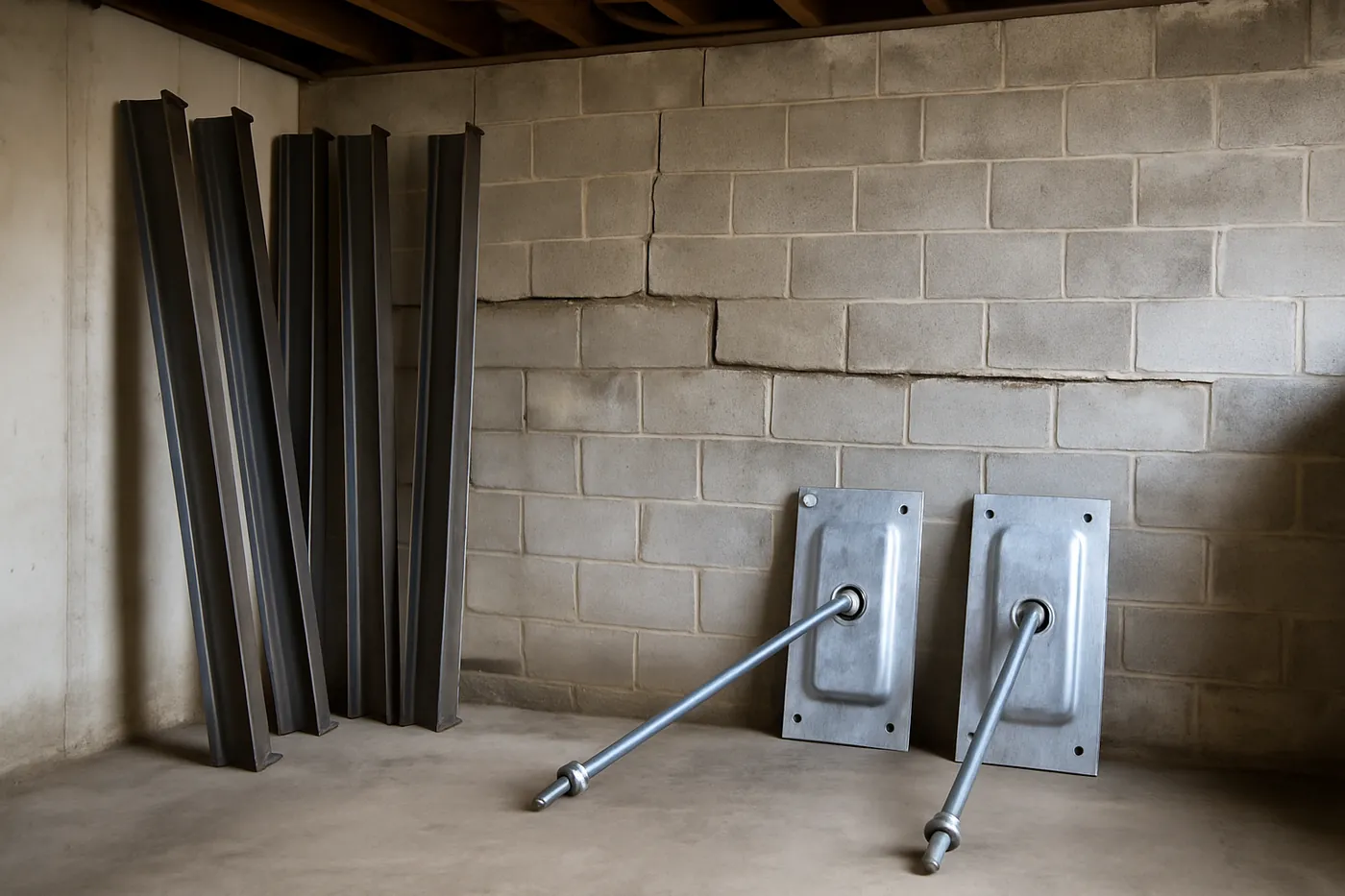
Who to call first, by situation
| Situation | Start with | Why |
|---|---|---|
| Cracks or slopes, staying put | Contractor evaluation | Measured and priced; ask whether the visit is free |
| Buying or selling older brick or stone | Independent engineer | A century of cycles needs unsold judgment |
| Bids naming different causes | Independent engineer | A stamped tiebreaker beats the wrong repair |
| Adjuster calls burst-pipe damage “settling” | Independent engineer | Causation opinions move adjusters; adjectives don’t |
| Severe wall movement, redesign territory | Engineer, then contractor | Stamped design first, installation to spec second |
The KC cases that generate the disputes
This metro manufactures the contested scenarios. Its freeze-burst claims set up sudden-versus-chronic causation fights every winter. Its older masonry carries a hundred years of shrink-swell history into every sale, making the pre-purchase stamp the best money in the transaction. And its saturation-loaded walls occasionally move past the point where catalog bracing applies and the fix needs design. Most houses need none of this (the survey resolves the ordinary case) but the exceptions are real, and pretending otherwise sells you the wrong evaluation.
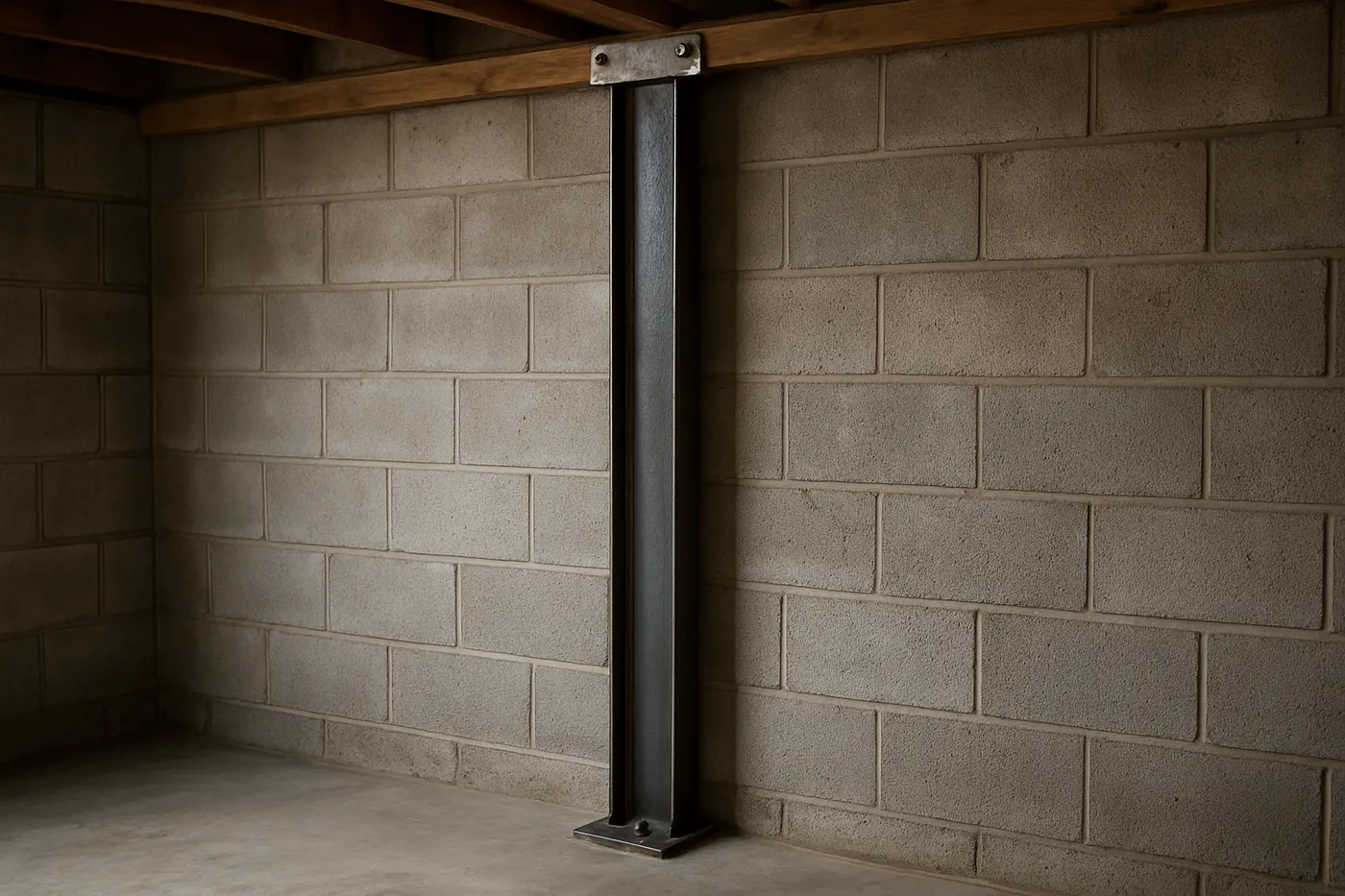
When both are on a foundation repair job
With an engineer involved, the order is straightforward: the engineer specifies the pier locations, capacities and wall design, and the installer follows that specification, logging each pier’s torque or refusal beside it so anyone can audit the job from the paperwork. When it is finished you should have the stamped diagnosis, the install records and the written warranty, which together tell a buyer’s inspector the repair was engineered, not improvised. Cost for each layer is in the cost guide.
What a report worth paying for contains
Judge an engineer by the document, not the title. Four things belong in it: floor elevations given as measurements, a named cause, a specific fix (which pier, how far apart, and the depth or load it must reach) and a stamp that stands behind all of it. Around Kansas City, where trapped water in the clay is usually the root of the trouble, the report should also state plainly whether drainage is what is moving the house, because steel set under a water problem that is still active cures the symptom only. A page that just repeats the cracks you pointed out and ends by telling you to call a foundation company is not worth the fee. Whatever you receive, keep it: Missouri sellers who know of a structural problem are expected to disclose it, and a stamped cause alongside a completed repair is the best disclosure a seller can offer.
Engineer questions, straight answers
Do I need an engineer before getting KC repair bids?
Usually not. The measured evaluation gathers the same field data (elevations, crack maps, wall plumb) and prices a scope from it. The engineer's stamped report is worth the fee when independence is the point: buying an older masonry house, a fight over cause after a burst line, or bids that blame different causes.
When is the engineer clearly worth it in Kansas City?
Before buying one of the older brick or stone houses, where a century of shrink-swell cycles is built into the price and the negotiation needs a figure nobody profits from. When bids disagree about the cause. When an adjuster calls burst-pipe damage 'settling.' And when a wall has moved far enough that the fix has to be engineered rather than taken from a catalog.
What does the stamp add to the same measurements?
Independence. The specialist's evaluation is measured, but it comes attached to a bid, and any contractor's diagnosis should be read that way, the one we pass you to included. The engineer's report is attached to nothing: cause, severity and remedy, stamped, with no repair income depending on the answer. Courts, lenders and adjusters value that independence, which is why the service exists.
How do KC's winters figure into engineer disputes?
Two recurring ways. Freeze-burst claims generate causation fights (sudden event versus chronic movement) where a stamped opinion moves adjusters that measurements alone don't. And freeze-thaw's constant working of older masonry raises real questions on severe walls: whether bracing suffices or the repair needs design. Both are engineer territory; both are rarer than routine repair.
Will the specialist install to an engineer's specifications?
Yes, and it is worth doing on a disputed job, since the cause is decided before any steel arrives. Have the engineer's scope bid line by line, and ask that every pier's torque or refusal be logged next to its specification so the result can be audited later. A contractor who disagrees with the specification should raise it in writing with you and the engineer, not substitute something different without telling anyone.
Get a Kansas City foundation evaluation
Tell us what the house is doing (cracks, a leaning wall, doors gone crooked, water in the basement) and we'll pass your request on for an evaluation. A specialist who serves the Kansas City area will call you back.