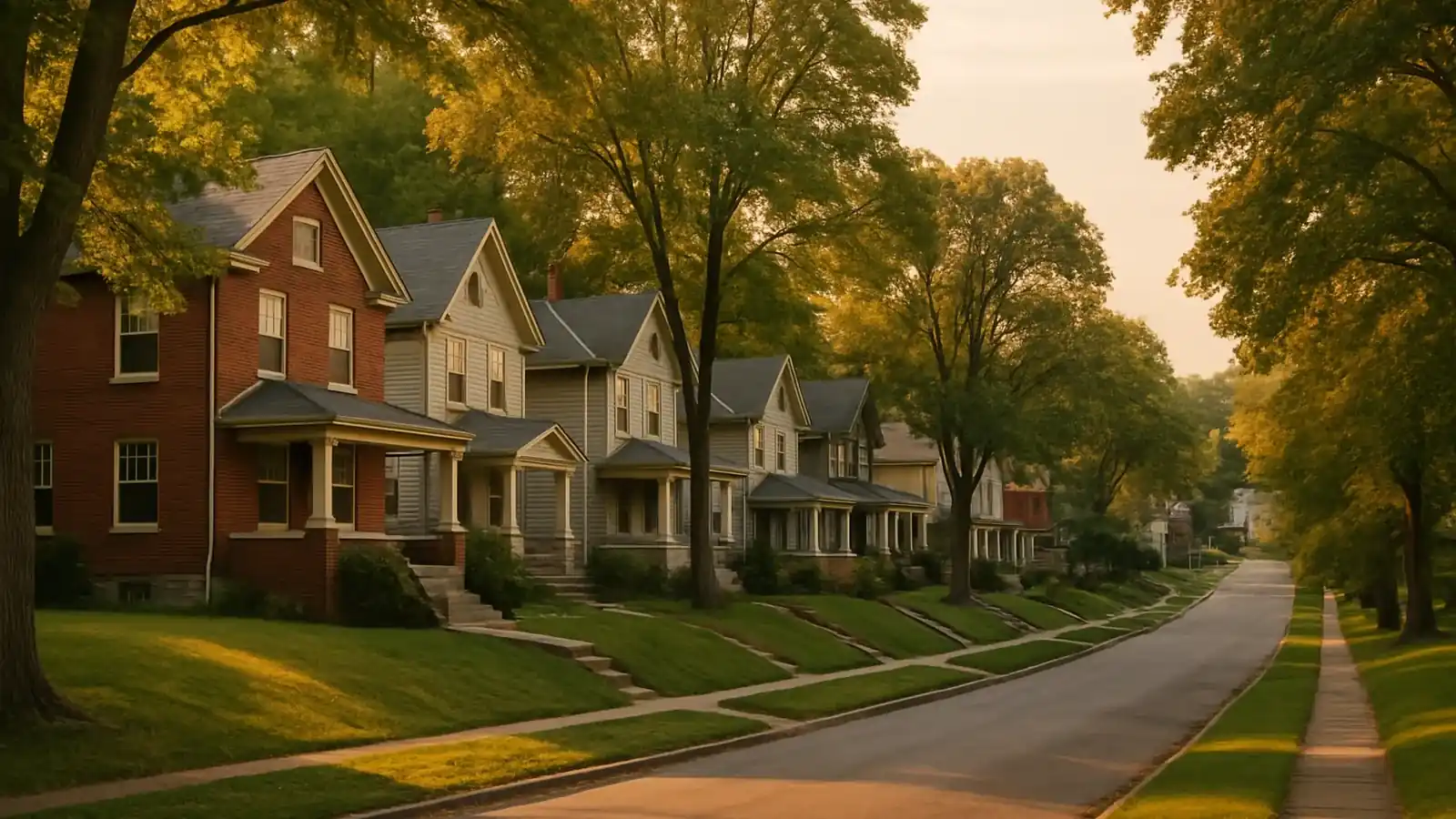
Helical and push piers for Kansas City foundation repair both cost $1,200–$3,000 per pier; which one fits depends on how heavy the structure is. Push piers are driven to a logged refusal using the house’s own weight (suited to older brick), while helicals are turned to a measured torque, which suits light postwar frame houses, porches and additions.
How each proves itself, and how KC’s housing eras and deep frost line sort the choice.
Two proofs of the same promise
In this metro a pier must reach past all the soil that moves (the wet-dry swing in clay-rich ground, plus the freeze-thaw layer above it) and stop on bearing that does not. A push pier is a steel tube pressed down hydraulically beside the footing, using the weight of the house to push against, until the ground stops it; the recorded refusal pressure proves it. A helical pier is screwed down with welded plates, and the torque reading at the gauge rises with its capacity, so it proves itself during installation and needs no house weight to do so.
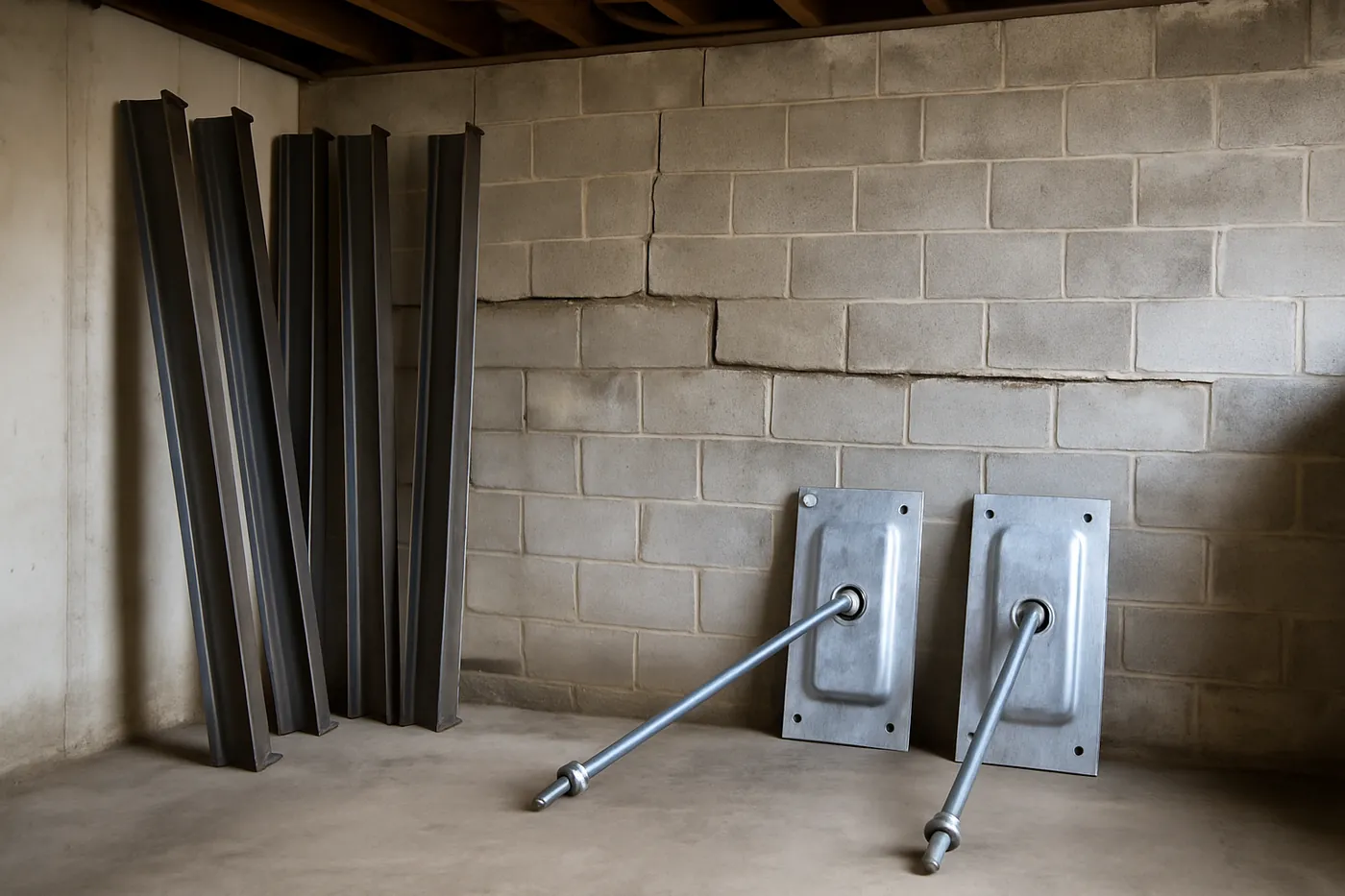
Side by side
| Push piers | Helical piers | |
|---|---|---|
| Advance | Driven against the structure’s weight | Rotated to specified torque |
| Proof | Refusal pressure, logged per pier | Installation torque, logged per pier |
| Needs house weight | Yes | No |
| KC sweet spot | Older masonry: Brookside-era brick, stone foundations | Postwar frame: Raytown, Gladstone ranches; porches, additions |
| New construction | No | Yes: proven before framing |
| Cost | $1,200–$3,000 per pier; depth to bearing sets the spread | |
What KC ground does to the decision
Two local facts shape every pier scope. First, the housing split: the metro’s older masonry has weight to drive push piers honestly, while the vast postwar rings are light enough that helical torque is the more truthful proof, and mixed jobs, a heavy main footing plus a light porch, routinely carry both types under one warranty with both logs. Second, the frost line: KC’s 36-inch code depth reflects a freeze-thaw regime that churns everything shallow, which is why under-built stoops and porch footings fail first here and why light attachments end up on helicals almost by default. Whether piers are the right repair at all is the settlement diagnosis; install mechanics live on the piering page.
Lifting brick without writing new cracks
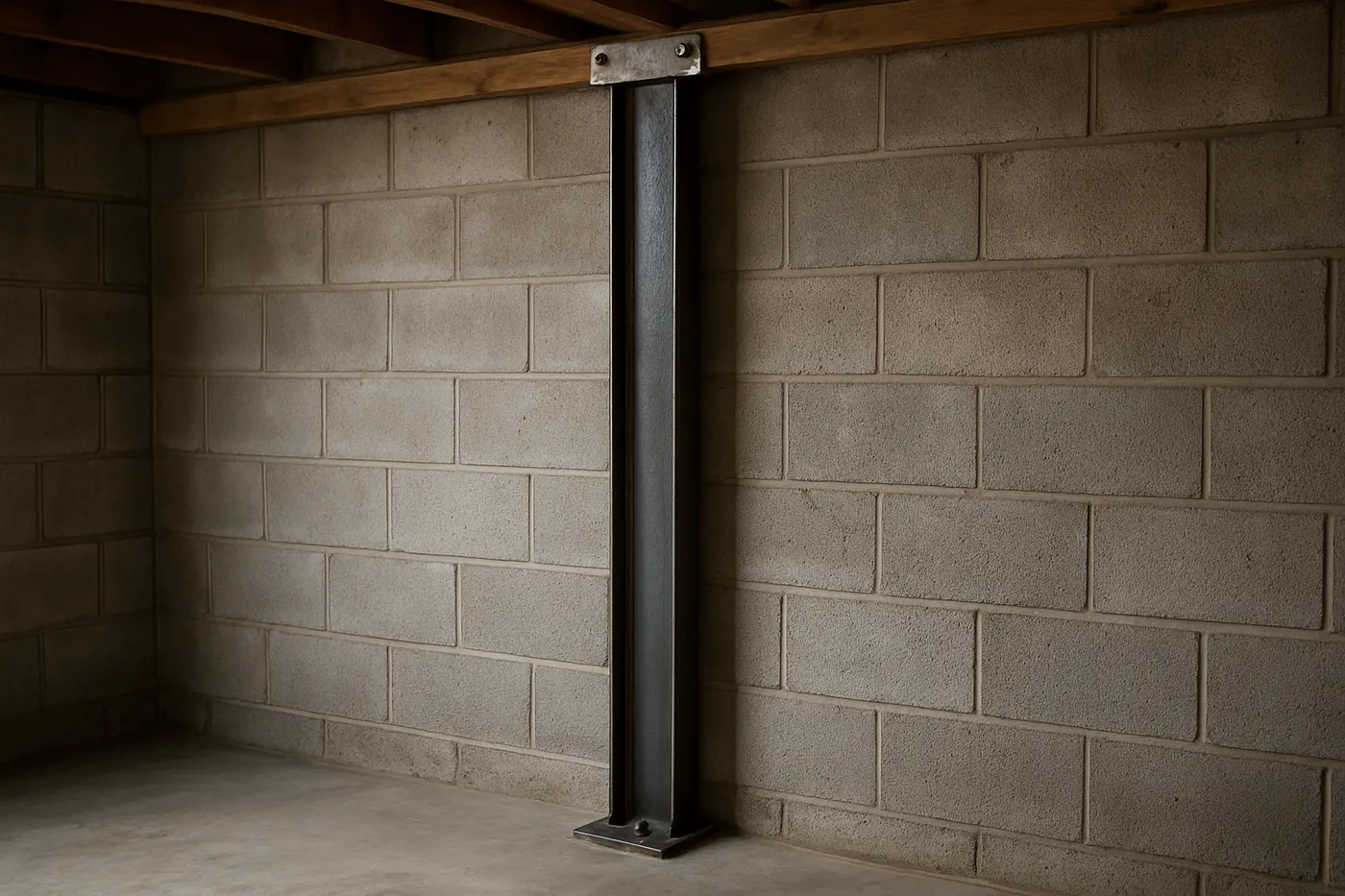
Kansas City’s older houses raise the lift question: on brittle masonry, recovery comes in small steps taken across all piers together while cracks are watched, or not at all where the structure says no, and stabilizing without lift is sometimes the honest scope, put in writing before any steel goes in. Cracked joints get injection and stitching once the movement stops. The math behind pier counts and depths is in the cost guide.
What the pier warranty is actually worth
Look at the warranty before you look at the price. What it guarantees is pier capacity: the section that was supported carries its design load. It does not cover the whole house, and it does not cover sections nobody piered. Four questions sort a real warranty from marketing: does it transfer when you sell, is there a transfer fee, does it cover the piered run or the entire structure, and would it survive the installer going out of business (a third-party backed warranty would; a promise on letterhead would not). Find out whether it requires you to maintain drainage; on Group D clay that drains so badly, that requirement is normal and fair. Hold on to the depth and torque records: with frost reaching the 36-inch code depth here, pier depth is the heart of the job.
Pier questions, straight answers
Do the two pier types cost differently in KC?
No, both run $1,200 to $3,000 per pier, and the spread inside that range comes from depth to stable bearing and access, not from the steel. What differs is the proof each offers: logged refusal pressure for push piers, logged installation torque for helicals. Which proof your house can deliver is a weight question, and that's how the choice actually gets made.
Which type fits KC's older brick and stone stock?
Usually push piers. Two-story masonry in Brookside, the Northeast and the older ring suburbs has real weight to push against, and driving steel to a true refusal under that load is about as convincing as pier proof gets. Those same houses need careful, staged lifting, since brittle masonry does not forgive haste, but that affects labor, not which pier is chosen.
Which type fits postwar ranches and split-levels?
Helical, usually. The one-story frame stock across Raytown, Gladstone, and Independence is light; a push pier reacting against it can run out of house before convincing refusal. Helicals prove capacity by torque, independent of the structure, which also makes them the default under porches, stoops, and additions across the metro.
Does the 36-inch frost depth change pier work?
It sets the floor, not the goal. Piers pass through the frost zone on their way to bearing well below it. The point is to carry load beneath everything that moves, and KC's churned, freeze-cycled top layers are exactly what to get under. What frost depth does affect is shallow footings and stoops, which is why light attachments fail here first and end up on helicals.
What documentation should any pier bid include?
Three things to get in writing: proof logged for every pier (torque or refusal), the depth the price assumes and the cost per foot beyond it, and which parts of the house justify which pier type. Bids that answer all three tend to arrive at the same honest scope. Ask for the logs to be promised in writing, along with a transferable warranty they attach to.
Get a Kansas City foundation evaluation
Tell us what the house is doing (cracks, a leaning wall, doors gone crooked, water in the basement) and we'll pass your request on for an evaluation. A specialist who serves the Kansas City area will call you back.