
Most Kansas City foundation repair is not covered by homeowners insurance: policies exclude earth movement, and the metro’s shrink-swell clay is that exclusion’s textbook case. The live exception (frequent in KC winters) is a sudden burst line moving soil. Excluded repairs run $3,800–$12,500.
The exclusion, the freeze-burst exception, and the file that decides between them.
The earth-movement exclusion, plainly
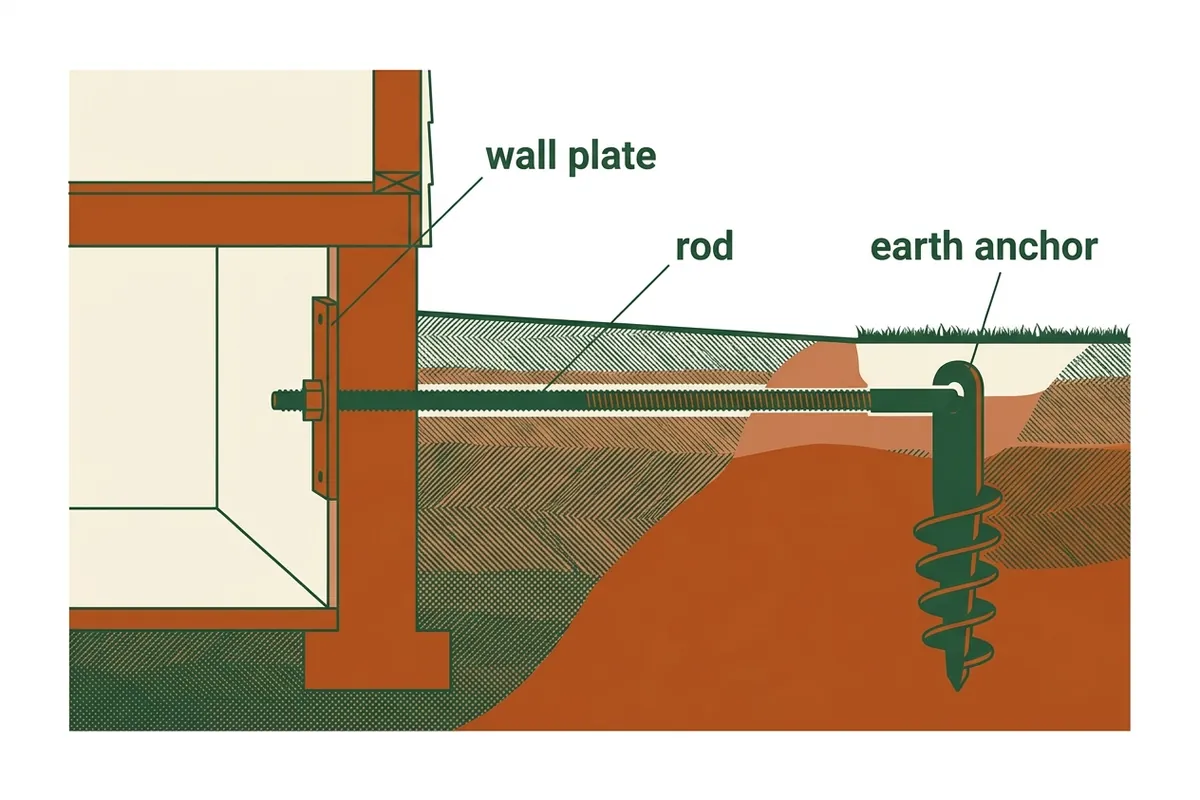
Standard homeowners policies exclude damage from soil that settles, shrinks, bulges or expands (earth movement), because on clay like Kansas City’s it is a schedule, not an accident. The causes covered on this site, the seasonal swing behind settlement, the saturation pressure behind bowing walls, and the freeze-thaw that pries cracks wider dozens of times each winter, all count as excluded earth movement in policy language. Endorsements and wording vary; the text that decides it is the exclusions section of your own policy.
The exception KC winters keep relevant
The claims that do succeed involve sudden accidental water discharge, and 70 to 80 freeze-thaw days a year keep the classic case common: a supply line freezes, splits, and releases water that soaks, swells or washes out soil at the foundation. The discharge is a covered water peril on most policies, and foundation damage that comes directly from it often follows. The key words are sudden and accidental: a slow leak that fed the clay over several seasons usually fails that test, however much the end damage looks the same.
Covered or excluded: the usual verdicts
| What happened | Usual outcome |
|---|---|
| Seasonal clay settlement or swell | Excluded: earth movement |
| Saturation pressure bowing a basement wall | Excluded: earth movement |
| Frozen line bursts; soil moves the foundation | Commonly covered: sudden discharge |
| Slow leak discovered after years | Usually excluded, not sudden |
| Surface flooding or snowmelt entering | Homeowners: excluded. NFIP territory |
| Ponding from unfixed grading | Excluded: maintenance |
Build the file before you call
- Photograph the event: the burst line, the water, dates visible, before the plumber’s repair tidies the scene.
- Written diagnosis naming the failure sudden: freeze-burst, not wear.
- Measure the movement now: elevations and crack widths; the evaluation can document both, yours regardless of filing.
- Contested causation is where an independent engineer’s opinion earns its fee: “that’s just settling” is an argument, not a finding.
When the answer is no
Kansas City owners mostly pay for foundation work themselves, so this site publishes every range openly. The cost guide shows what moves each number, and asking for a line-by-line scope means you can stabilize the house now and book the remaining work later without paying for a fresh diagnosis.
If the denial letter comes back
Treat a denial as an opening move. Request, in writing, the policy language the carrier used, since applying the earth-movement exclusion to damage from a broken pipe is one of the decisions most often reversed. A causation letter from a licensed engineer, stamped, naming the escaping water as the covered peril and linking it to the foundation damage, is what reverses it. Keep the categories straight: sump backup is covered only by its own endorsement, surface water is an NFIP question, and seasonal shrink-swell settling is excluded under nearly every policy. If the insurer goes quiet, file a consumer complaint with the Missouri Department of Commerce and Insurance, and keep an eye on the deadline in your policy's suit-limitation clause, which does not pause while you argue.
Insurance questions, straight answers
Does homeowners insurance cover foundation settling in Missouri?
Almost never. Standard policies exclude earth movement (settling, shrinking, expanding soil), and Kansas City's shrink-swell clay going through its seasonal cycle is exactly what that exclusion is written for. It applies no matter how gradual the damage or how well the house was maintained. The exclusions section of your own policy holds the wording that decides it; this page is general information, not coverage advice.
What's the exception that pays in Kansas City?
Sudden accidental water discharge, and Kansas City winters make it common. A supply line freezes and splits, water soaks or washes out soil at the foundation, and the structure moves. The discharge is a covered peril on most policies, and foundation damage that comes directly from it often comes along with it. The test is suddenness; a leak that weeps for years fails it.
Frozen pipes are a KC winter staple. Does that help a claim?
It makes the covered scenario genuinely frequent: burst-pipe events here aren't exotic. What decides the claim is documentation: the plumber's written diagnosis naming the freeze-burst, dated photos, the water bill or meter evidence, and prompt measurements of the new movement. The event being common doesn't excuse thin evidence; adjusters still distinguish sudden from chronic.
What should I document before repairs erase the evidence?
Everything, dated, before the plumber leaves: the failed line, standing water, the diagnosis in writing, and measured elevations and crack widths as soon as possible. The evaluation can produce the measurement half; ask for the readings whether or not you file. If causation gets contested ('that's just settling') an independent engineer's opinion is the document that moves it.
What do excluded repairs cost out of pocket?
What it costs anyone: most structural repairs $3,800-$12,500, piers $1,200-$3,000 each, wall restraint $2,500-$10,000, crack injection $400-$800. Ask for a written scope priced per line, which lets you phase the job (stabilize now, cosmetic work later), the way most Kansas City owners paying out of pocket handle it.
Get a Kansas City foundation evaluation
Tell us what the house is doing (cracks, a leaning wall, doors gone crooked, water in the basement) and we'll pass your request on for an evaluation. A specialist who serves the Kansas City area will call you back.