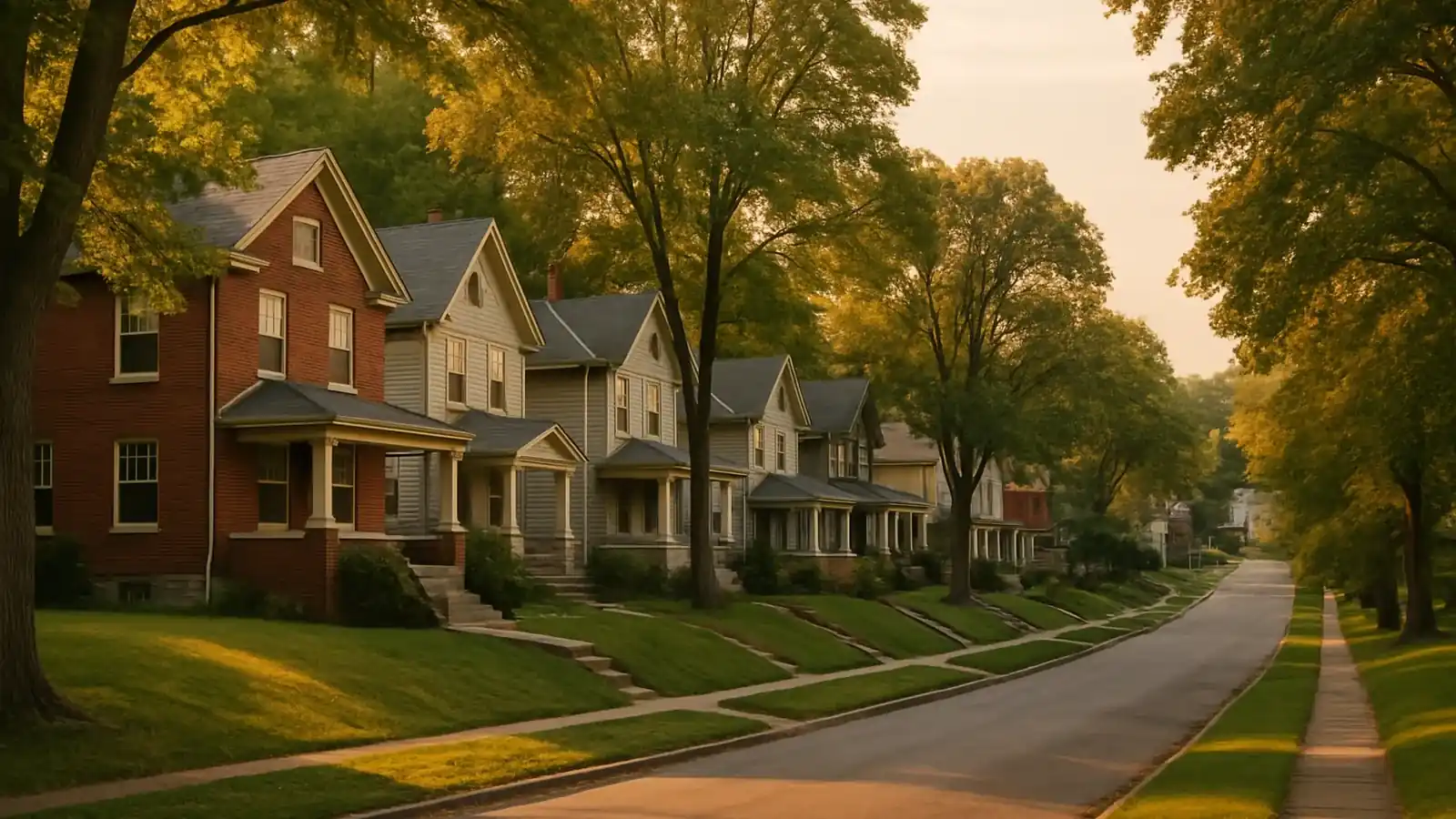
Kansas City Foundation Co. serves both sides of the metro: Independence, Lee's Summit, Blue Springs, Raytown, Gladstone, Liberty, and Grandview in Missouri; Overland Park and Olathe across the line in Johnson County, and a good evaluation there is measured.
Choose your community
IndependenceLee's SummitBlue SpringsRaytownGladstoneLibertyGrandviewOverland ParkOlathe
Every town we cover, and what changes there
Every town has its own page, because the soil and the age of the houses change across the metro. In brief:
Independence: From the Square to the postwar blocks
Independence layers its housing eras like sediment: 19th-century stock around the historic Square, streetcar-age foursquares, then the great postwar fill-in of ranches east toward Blue Springs. Read what that means for an Independence property.
Lee's Summit: Growth-era ground
Lee's Summit's boom decades (the 1990s through the 2010s) were mass-grading decades: rolling farm parcels cut and filled into level subdivisions from Lakewood down to Raintree. Read what that means for a Lee's Summit property.
Blue Springs: The 1985-2005 cohort hits midlife
Blue Springs built its identity in the 80s-2000s wave: split-levels and two-stories on graded lots between the interstate and the lakes. Read what that means for a Blue Springs property.
Raytown: Seventy winters into the experiment
Raytown's ranch blocks went up fast for postwar families: block basements, brick trim, footings sized to 1958 judgment. Read what that means for a Raytown property.
Gladstone: North of the river, same rated clay
Gladstone's 1960s-70s housing rode the Northland wave up from the river bluffs: ranches and split-levels on ground that rolls more than the Kansas-side flats. Read what that means for a Gladstone property.
Liberty: Square-town core, boom-town edge
Liberty holds the metro's contrast neatly: brick-and-stone stock a century old around the historic square and William Jewell, then a modern ring (1990s-2020s subdivisions running toward the interstate) on graded pads in their consolidation years. Read what that means for a Liberty property.
Grandview: Open ground, full exposure
Grandview's 1950s-70s ranch stock sits on the metro's southern shelf: flatter, more open, less tree canopy than the first-ring suburbs north of it. Read what that means for a Grandview property.
Overland Park: The state line is not a soil line
Overland Park's tidy subdivisions (1970s ranches up north, 1990s-2020s two-stories spreading south past 135th) sit on the same clay family as the Missouri side, with the same USDA paperwork. Read what that means for an Overland Park property.
Olathe: Fresh subdivisions on old prairie clay
Olathe's growth stamped subdivisions across former prairie fast enough that whole zip codes share a construction decade, and therefore share a settlement calendar. Read what that means for an Olathe property.
Same survey, different chapters
The clay story reads differently street by street: Independence layers a century of housing eras; Lee's Summit and Olathe work through fill consolidation; Raytown and Gladstone ride the postwar clay cycle; Overland Park guards finished basements against irrigation-fed movement. Each page above is written for its own ground, and the evaluation reads your specific lot, not the metro average. Outside these ten? Ask; travel quotes are honest.
Fill clocks and clay clocks
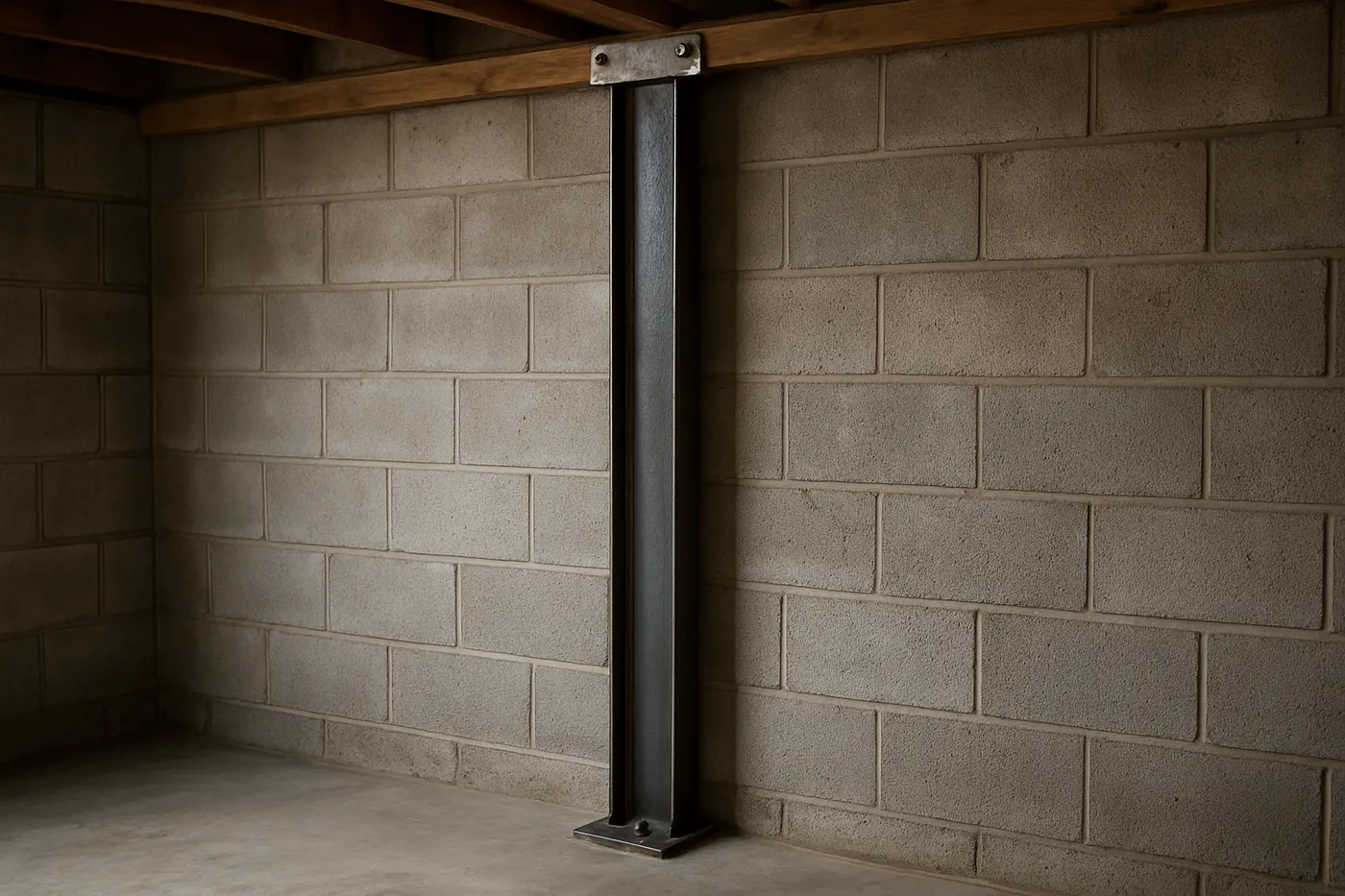
Two timers run under this service ring at different speeds. The postwar inner ring (Raytown, Gladstone, Grandview, much of Independence) has cycled on native clay for 60-plus years: mature problems, banked wall deflection, water paths worn into habit, and repair histories worth reading before writing new scopes. The growth-corridor communities (Lee's Summit, Blue Springs, Olathe, newer Liberty) add builder fill over the clay, and fill consolidates on its own decade-long schedule regardless of what the clay beneath is doing; the first diagnostic question there is which clock your symptoms answer to. Overland Park runs a third pattern: mature trees and irrigated lawns building sharp moisture differentials against finished basements that hide movement until drywall reports it. Each town page reads its own timer.
What it means when we say we cover a town
It means a local specialist gets your request and evaluates the house where it stands, just as they would inside Kansas City. Expect to ask for the same laser floor survey and crack readings, a written scope after the visit, and travel listed separately rather than spread through the other lines. If you are far enough out that travel adds real cost, get the number before you say yes.
Foundation work is scheduled, not urgent, so ask whether an outlying address changes the timing.
The nine communities listed share ground this site covers well enough to describe before anyone visits. That, rather than a circle drawn around downtown, is the real edge of the list: places whose soil and houses are explained on these pages.
Coverage questions
Is there an extra charge to come out to the outlying towns?
When travel is charged, it should sit on a line by itself where you can see it before you sign. Mixed into the cost of the work, it stops you from comparing the quote with anyone else's.
My address is not on the list. Is it still covered?
Usually yes, and asking is free. The list is the area this site covers in depth, not a hard limit, and an address between two of these towns is almost always in range.
Is the first visit free, everywhere on this list?
That varies by company. Many local specialists don't charge for a first visit, so ask during the first call, before the appointment. Whatever the answer, ask that the floor survey, crack readings and written findings stay with you, whether or not you hire anyone and whether or not the specialist who visited is the one who prices the work.
Why does the price differ between towns for the same job?
Because soil and housing differ between, say, Liberty and Olathe. Each town page above covers what is local there, and your quote should come from measurements taken at your house rather than an average across the metro.
Get a Kansas City foundation evaluation
Tell us what the house is doing (cracks, a leaning wall, doors gone crooked, water in the basement) and we'll pass your request on for an evaluation. A specialist who serves the Kansas City area will call you back.