
Foundation crack repair in Kansas City costs $400–$1,500 for injection and reinforcement. With 100+ freeze-thaw cycles a year working as wedges, KC cracks widen on a schedule — full-depth injection before winter is the metro's best-value structural maintenance.
Reading crack direction, what real injection involves, and when a crack is evidence of something larger.
Direction is diagnosis
| Crack | Usual KC cause | Move |
|---|---|---|
| Vertical hairline, poured wall | Curing shrinkage | Seal against water and the freeze count |
| Diagonal off corners, widening | Settlement — clay cycling or fill | Measure; piering conversation |
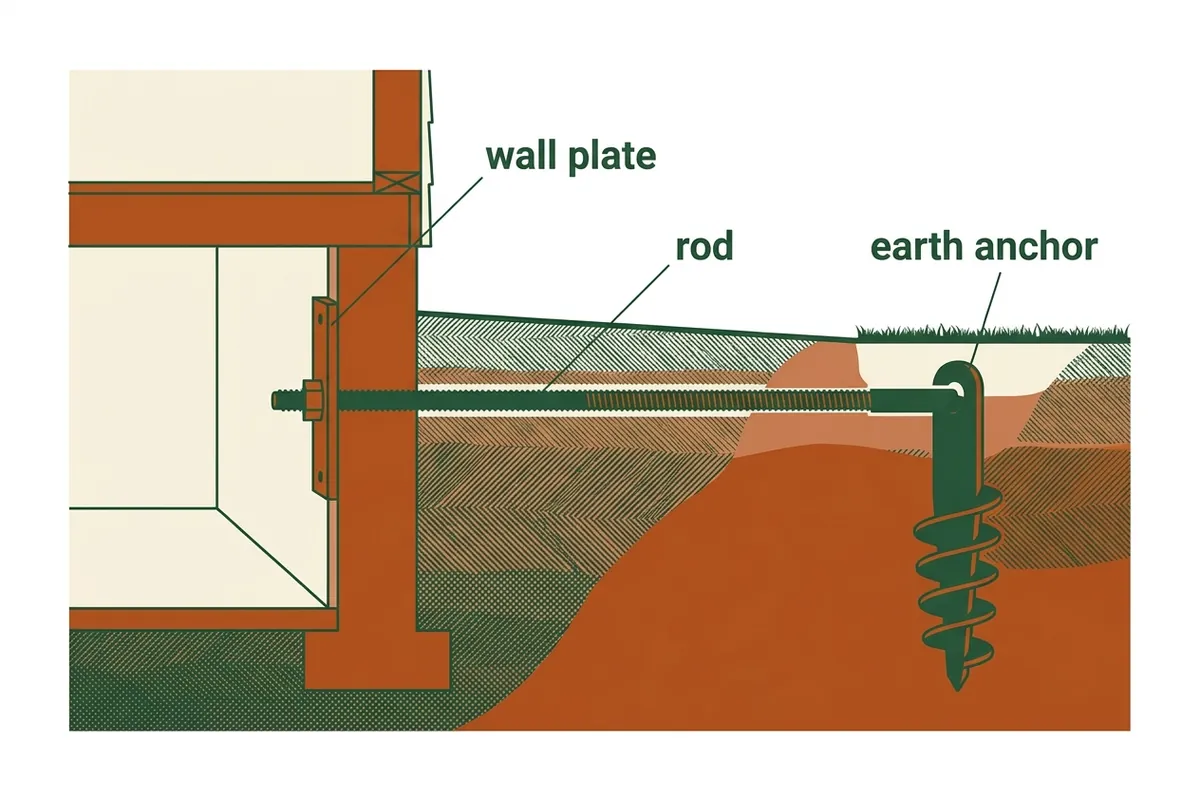
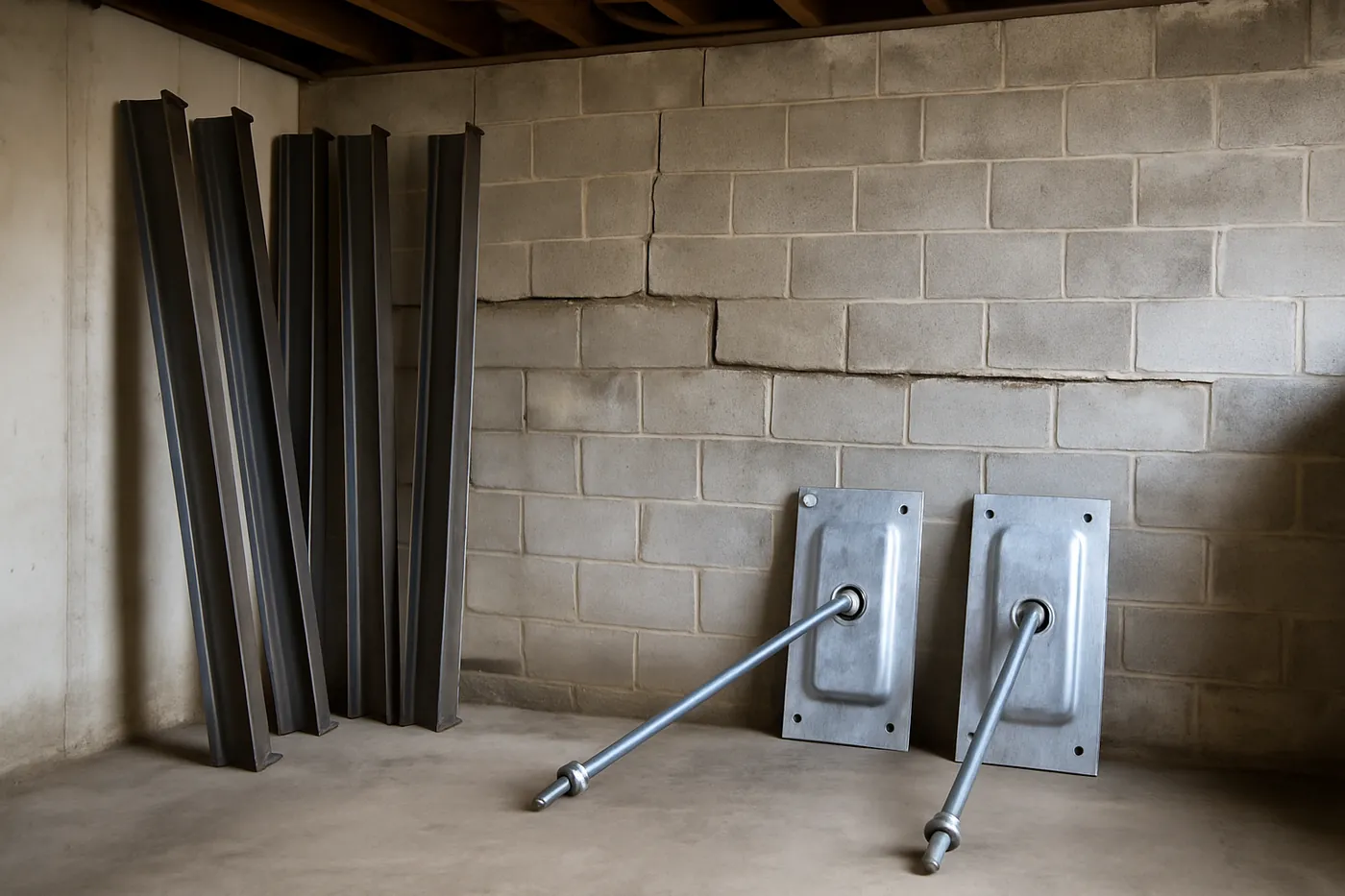
| Horizontal along a bed joint | Lateral clay pressure | Priority look — wall restraint |
| Stair-step in brick/veneer | Footing movement below | Evaluate before repointing |
Injection that survives the freeze count
A crack lives through the wall's full thickness, so the repair must too. Polyurethane handles the wet and the restless: injected under pressure it chases water through the void, expands, and cures flexible — built for a wall that will flex a hundred times before spring. Epoxy takes the dormant: it rebinds the crack into concrete stronger than the original pour. Movement-history cracks get carbon-fiber staples bridging the line so winters work against fiber, not mortar. Each repaired crack is logged with width and photo — your wall becomes a dated instrument.
When the crack is a witness statement
One sealed crack: case closed. A crack that reopens, widens, or recruits others is testifying — the rated clay is moving something, and re-injection would be tampering with the witness. That's the trigger for the free measured evaluation: floor levels, wall deflection, water walk. Half the verdicts are benign and written down as such; the other half just caught a structural problem at its cheapest moment.
A hundred freeze-thaw cycles: how KC cracks are triaged
Kansas City runs more than a hundred freeze-thaw cycles a year — a hundred times the water in the clay expands about nine percent, presses, and lets go. Cracks here get triaged by what that cycling has taught them: hairline verticals in poured walls are shrinkage plus cycling, sealed with flexible polyurethane and forgotten. Stair-steps in block that widen past a quarter inch, or verticals wider at top than bottom, mean a footing riding the shrink-swell wave — a settlement conversation. Horizontals at mid-wall are the clay's lateral signature and route to wall restraint, not injection.
The material rule is climate-driven: on soil this active, polyurethane's flexibility beats epoxy's rigidity for most residential cracks — an epoxy weld across a crack the seasons still work simply relocates the crack an inch over. Epoxy earns its place where an engineer specifies structural transfer and the movement source is corrected first. Every injection here is priced with its cause named, because sealing a symptom on Wymore-Ladoga clay is a subscription.
Crack questions, straight answers
Which KC foundation cracks are urgent?
Horizontal in a basement wall — that's clay pressure, and it outranks everything. Next: diagonals widening past a quarter inch or reopening after repair, which suggest live settlement. Vertical hairlines in poured concrete are usually curing shrinkage that needs sealing before freeze-thaw finds it, not panic.
What does crack repair cost in Kansas City?
$400-$800 per injected crack, $700-$1,500 with carbon-fiber stitching across movement-prone lines. If the crack is settlement's or wall pressure's messenger, injection alone would be paying to shoot the messenger — we'll say which repair the evidence actually orders.
Why do cracks here grow every winter?
A hundred freeze-thaw cycles is a hundred pry-bar strokes: water in the crack freezes, expands ~9%, wedges; thaw admits more water to the wider crack. KC's cycle count is among the Midwest's highest, which is why fall injection is the best-timed maintenance money in this metro.
Epoxy or polyurethane for my crack?
Wet or moving cracks get polyurethane — it chases water, expands, stays flexible through the freeze count. Dormant structural cracks get epoxy — a weld stronger than the wall around it. The choice is per-crack and stated in the scope with the reason.
Can I seal a crack myself?
Surface caulk buys a season and hides the width history we'd want to read. If you DIY, photograph and measure first — dated evidence beats memory. Full-depth injection needs ports and pressure; that part is genuinely equipment, not courage.
Get a free Kansas City foundation evaluation
Tell us what the house is doing — cracks, a leaning wall, doors gone crooked, water in the basement — and we'll schedule an evaluation with photos and crack measurements. We reply the same business day.